
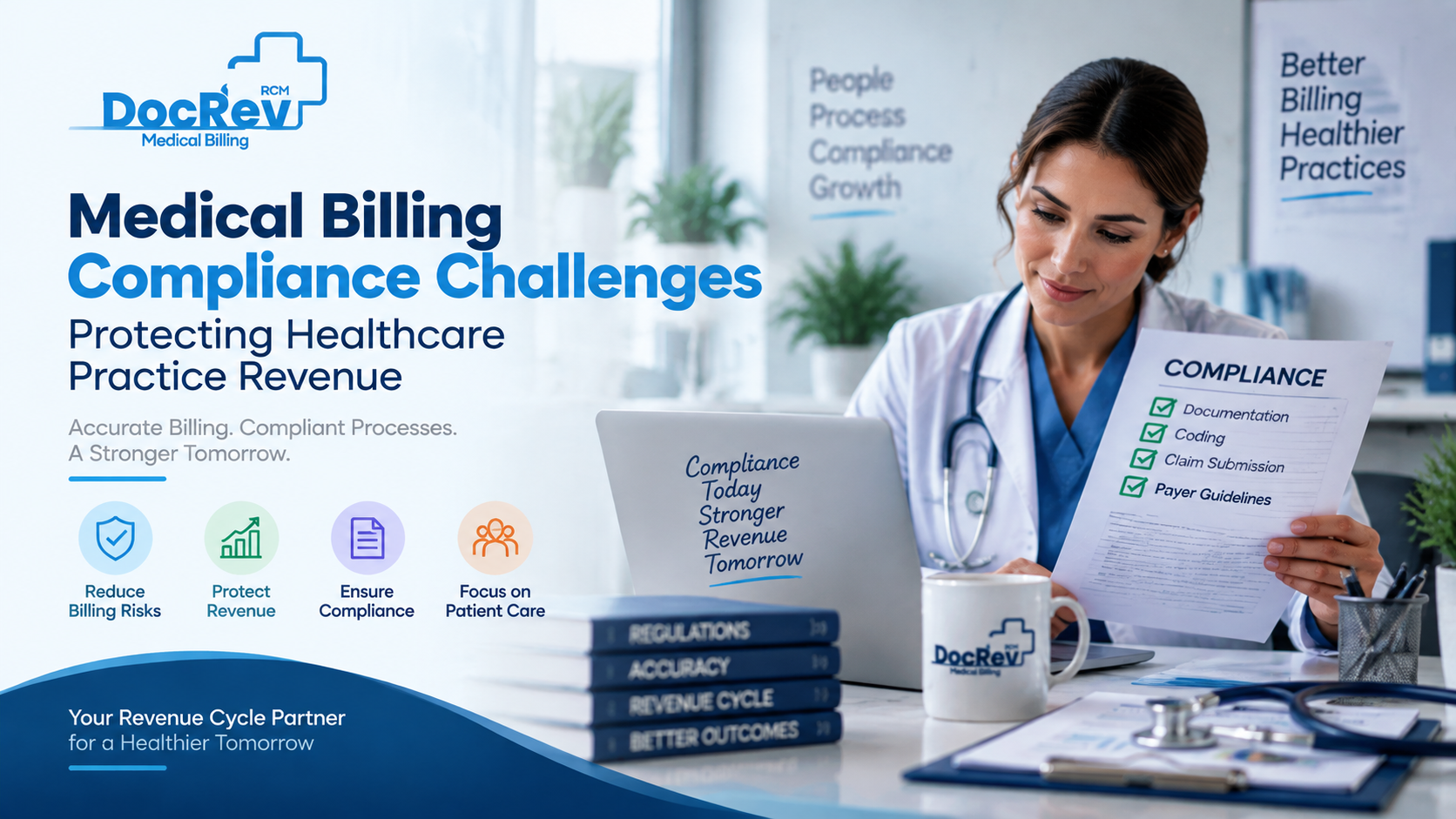
Healthcare practices work hard to provide quality patient care, but behind every successful practice is a complex financial process that determines whether services are properly reimbursed. While many organizations focus on increasing patient volume and expanding services, one of the biggest factors affecting financial performance is often overlooked: medical billing compliance.
Medical billing compliance is not only about following regulations or avoiding potential penalties. It is about creating a reliable revenue cycle where documentation, coding, claims submission, payer requirements, and billing workflows work together correctly. When these areas are not managed properly, even a successful medical practice can experience delayed payments, denied claims, revenue leakage, and unnecessary administrative pressure.
Many billing problems do not happen because healthcare providers are not delivering appropriate care. Instead, they occur because small process gaps create financial problems over time. Incorrect coding, incomplete documentation, missed payer requirements, inaccurate claim information, or inconsistent billing procedures can prevent practices from receiving the reimbursement they have already earned.
This is why healthcare organizations need to look at compliance as a core part of revenue cycle management rather than a separate administrative responsibility.
A strong compliance-focused billing process helps practices reduce avoidable errors, improve claim accuracy, strengthen financial visibility, and protect revenue throughout the entire billing lifecycle.
DocRev RCM supports healthcare organizations through specialized medical billing services designed to improve billing accuracy, manage claims efficiently, and create stronger revenue cycle workflows. The goal is not only to submit claims but to help practices build a more organized and reliable financial process.
Why Medical Billing Compliance Matters for Healthcare Practices
Medical billing compliance directly affects the financial health of a healthcare organization. Every claim submitted represents a connection between the services provided by the practice and the reimbursement expected from payers.
When billing information accurately reflects the care provided, the claim has a stronger foundation for successful processing. However, when documentation, coding, or billing information does not meet payer requirements, the claim may face delays, additional reviews, denials, or payment issues.
For healthcare practices, these problems can create more than temporary inconvenience. Repeated compliance issues can increase administrative workload, slow cash flow, and make it more difficult for leadership teams to understand where revenue problems are coming from.
A compliant revenue cycle creates consistency. It helps ensure that every stage of the billing process follows established procedures, from reviewing patient information and documentation to submitting claims and managing payments.
This is especially important because healthcare reimbursement continues to become more complex. Payer requirements, coding standards, documentation expectations, and regulatory considerations continue to change, making it difficult for practices to manage everything without dedicated expertise.
Medical Billing Compliance Is More Than Avoiding Errors
When many people hear the term medical billing compliance, they immediately think about preventing mistakes. While accuracy is an important part of compliance, the bigger picture is much broader.
Compliance means creating a billing environment where processes are consistent, information is accurate, documentation supports services provided, and revenue cycle activities follow appropriate guidelines.
A healthcare practice can provide excellent patient care and still experience financial challenges if its billing processes are not properly aligned with compliance requirements.
For example, a service may be medically necessary, but reimbursement can still be delayed if documentation does not properly support the claim. A procedure may be correctly performed, but payment issues can occur if coding information does not accurately represent the service.
This shows why compliance is closely connected with revenue protection. It is not simply a regulatory responsibility. It is a financial strategy that helps practices maintain a healthier revenue cycle.
Practices that prioritize compliance are better positioned to identify problems early, reduce unnecessary claim issues, and create processes that support long-term financial stability.
How Billing Compliance Challenges Affect Practice Revenue
Revenue loss in healthcare does not always happen because a claim is completely rejected. In many cases, financial problems develop gradually through small inefficiencies throughout the billing process.
A claim that requires additional review creates delays. A documentation issue may require correction. A coding mistake may result in a denial. An unresolved payer question may leave revenue sitting in accounts receivable for months.
When these situations happen occasionally, the impact may seem manageable. However, when they occur repeatedly across hundreds or thousands of claims, the financial effect can become significant.
This is why healthcare practices should not only measure how many claims are submitted. They should also understand how efficiently those claims move through the revenue cycle.
Important questions include whether claims are being submitted accurately, whether denials are increasing, whether documentation supports reimbursement, and whether unpaid balances are receiving proper follow-up.
These questions help reveal whether a practice's billing process is protecting revenue or creating unnecessary financial obstacles.
Documentation Accuracy and Medical Billing Compliance
Documentation is one of the most important foundations of a compliant medical billing process. The information recorded during patient care supports the services reported on claims and helps establish the accuracy of the reimbursement request.
When documentation is incomplete, inconsistent, or does not properly support the billed service, claims may face additional scrutiny or payment delays.
For healthcare providers, documentation challenges can become more complicated because different specialties often have different requirements based on the services they provide.
A specialty practice managing complex procedures may require more detailed documentation processes compared with a practice handling routine visits. This makes it important for billing workflows to understand the relationship between clinical documentation and reimbursement.
A strong medical billing compliance process helps identify documentation-related risks before they affect claims. Instead of discovering problems after payment delays occur, practices can create better workflows that support accurate billing from the beginning.
The Connection Between Coding Accuracy and Revenue Protection
Medical coding plays a critical role in transforming healthcare services into billable information. Accurate coding helps communicate the services provided and supports the reimbursement process.
However, coding challenges are one of the common areas where compliance issues can develop. Incorrect code selection, missing information, outdated knowledge, or inconsistencies between documentation and coding can affect claim outcomes.
For healthcare practices, coding accuracy is not only about avoiding mistakes. It is about ensuring that the work performed by providers is represented correctly within the billing system.
When coding accuracy improves, practices can reduce unnecessary claim corrections, improve billing efficiency, and create a more predictable revenue cycle.
This is one reason many organizations choose to work with experienced revenue cycle partners who understand the importance of connecting coding accuracy with overall financial performance.
The Role of Payer Requirements in Medical Billing Compliance
Healthcare reimbursement depends heavily on payer requirements, and these requirements continue to become more detailed and complex. Insurance companies, government programs, and healthcare networks often have specific rules related to documentation, claim submission, authorization, coding, and reimbursement processes.
For healthcare practices, keeping up with these changing requirements can become challenging. A billing workflow that worked previously may create problems if payer policies change and the practice does not adjust its processes accordingly.
This is where medical billing compliance becomes essential. A compliant billing process does not simply submit claims based on previous practices. It continuously reviews requirements and ensures that billing procedures remain aligned with current expectations.
When payer requirements are overlooked, practices may experience unnecessary claim delays, increased denial rates, and additional administrative work. These issues can create financial pressure because revenue that should have been collected remains unresolved within the revenue cycle.
A specialized revenue cycle partner helps healthcare organizations manage these challenges by monitoring billing workflows, reviewing claim accuracy, and identifying areas where payer-related issues may affect reimbursement.
DocRev RCM supports healthcare practices through comprehensive revenue cycle management services that connect billing processes with broader financial performance goals. This approach helps practices maintain better control over claims, payments, denials, and outstanding revenue.
How Medical Billing Compliance Issues Lead to Claim Denials
Claim denials are one of the most visible signs that a revenue cycle may have compliance challenges. While not every denial is caused by a compliance issue, many avoidable denials are connected to problems that could have been identified earlier in the billing process.
Common compliance-related denial issues may involve incomplete documentation, inaccurate coding, missing authorization information, incorrect patient details, or failure to meet payer-specific requirements.
The challenge for healthcare practices is that denials often create a cycle of additional administrative work. Staff members must investigate the reason for rejection, collect missing information, correct the claim, and resubmit it while the original revenue remains delayed.
When the same denial reasons continue appearing, it usually indicates that the underlying process needs improvement rather than individual claims simply being corrected one at a time.
A stronger compliance strategy focuses on prevention. It reviews where problems begin, improves workflows, and creates processes that reduce the chances of similar issues occurring again.
DocRev RCM's denial management services help healthcare organizations analyze denial patterns, manage follow-up activities, and identify opportunities to improve revenue cycle performance.
Why Medical Billing Audits Are Important for Compliance Protection
Regular billing reviews allow healthcare organizations to identify potential issues before they become larger financial problems. A medical billing audit provides an opportunity to examine whether billing processes, documentation practices, and claim submission workflows are operating effectively.
Many practices only review their billing process after experiencing problems such as declining collections, increased denials, or payer concerns. However, a proactive approach can help identify weaknesses before they negatively affect revenue.
A compliance-focused billing audit can help reveal areas where improvements may be needed, including documentation consistency, coding accuracy, claim processing procedures, and revenue cycle workflow gaps.
The purpose of an audit is not simply to find mistakes. It is to understand how the billing process is performing and create opportunities for improvement.
For healthcare practices, this type of review provides valuable insight into whether current processes are supporting financial goals or creating unnecessary obstacles.
DocRev RCM provides medical billing audit services designed to help practices identify revenue cycle gaps, improve billing accuracy, and strengthen financial workflows.
The Impact of Compliance on Accounts Receivable Performance
Accounts receivable represents one of the clearest indicators of revenue cycle health. When claims are delayed, denied, or not properly followed up, outstanding balances continue to grow and affect the financial stability of the practice.
Compliance issues often contribute to A/R challenges because unresolved billing problems can prevent claims from moving efficiently through the payment process.
For example, a claim requiring additional documentation may remain unpaid until the issue is resolved. A coding problem may delay reimbursement. A missed payer requirement may create unnecessary follow-up work.
Effective compliance practices help reduce these obstacles by creating more accurate billing workflows from the beginning.
However, even with strong processes, outstanding balances still require consistent management. Practices need a structured approach for monitoring unpaid claims, identifying delays, and taking appropriate follow-up actions.
DocRev RCM's accounts receivable services help healthcare organizations manage aging balances, improve follow-up processes, and focus attention on revenue that remains unresolved.
Why Compliance Matters More as Healthcare Practices Grow
Growth creates new opportunities for healthcare organizations, but it also introduces additional complexity. As practices add providers, expand services, increase patient volume, or work with more payers, maintaining consistent billing compliance becomes more challenging.
Processes that worked for a smaller practice may not provide the same level of control as the organization grows. More claims, more documentation, and more payer relationships require stronger systems and more structured workflows.
Without proper compliance processes, growth can unintentionally increase billing risks. Administrative teams may become overwhelmed, errors may become harder to identify, and revenue cycle problems may remain unnoticed for longer periods.
A scalable compliance-focused revenue cycle helps growing practices maintain accuracy while managing increased financial activity.
This allows healthcare organizations to continue expanding while protecting the revenue generated through their services.
How Healthcare Practices Can Build a Stronger Medical Billing Compliance Process
Building a compliant medical billing process requires more than correcting problems after they happen. Healthcare organizations need structured workflows that support accuracy, consistency, and accountability throughout the entire revenue cycle.
A strong compliance approach begins with understanding where billing risks can occur and creating processes that address those risks before they affect reimbursement. This includes reviewing documentation practices, maintaining coding accuracy, monitoring payer requirements, and ensuring that claims move through the system correctly.
For many practices, the challenge is not understanding that compliance matters. The challenge is having enough time, resources, and expertise to manage every aspect of compliance while continuing to focus on patient care.
This is why many healthcare organizations work with experienced revenue cycle partners that understand both billing operations and compliance requirements. The right partner can help identify weaknesses, improve workflows, and create a more reliable financial process.
A successful compliance strategy should become part of everyday revenue cycle operations rather than a separate activity performed only when problems appear.
The Importance of Accurate Documentation in Protecting Practice Revenue
Documentation plays a central role in medical billing compliance because it connects the care provided by healthcare professionals with the reimbursement requested from payers.
When documentation accurately supports the services performed, it creates a stronger foundation for successful claims processing. However, incomplete or inconsistent documentation can create uncertainty during claim review and may lead to payment delays or additional requests for information.
For physicians and healthcare organizations, maintaining accurate documentation requires coordination between clinical teams, administrative staff, and billing professionals.
A compliant billing process ensures that documentation requirements are understood and that potential issues are identified before claims reach the payer.
This proactive approach helps reduce unnecessary interruptions, improves claim confidence, and supports a smoother reimbursement process.
Medical Coding Compliance and Its Effect on Reimbursement
Medical coding accuracy directly influences how healthcare services are represented within the billing system. Incorrect coding can create problems ranging from delayed payments to claim denials and compliance concerns.
For specialty practices, coding challenges can become even more complex because procedures and services often require detailed knowledge of specialty-specific requirements.
A strong coding compliance process ensures that reported services accurately reflect the care provided and that claims are supported by appropriate documentation.
When coding and documentation work together correctly, practices can improve claim accuracy and reduce unnecessary billing complications.
This is why healthcare organizations often rely on experienced billing professionals who understand how coding decisions affect the overall revenue cycle.
How Compliance-Focused RCM Improves Financial Visibility
One of the biggest advantages of a well-managed compliance process is improved visibility into financial performance.
Without accurate reporting and consistent monitoring, healthcare practices may know that revenue is affected but may not understand the exact reasons behind those challenges.
A compliance-focused revenue cycle provides better insight into areas such as claim performance, denial trends, payment delays, accounts receivable aging, and workflow efficiency.
This information allows practice leaders to make informed decisions instead of relying on assumptions.
For example, if a practice notices increasing denials, detailed revenue cycle analysis can help determine whether the problem is related to documentation, coding, payer requirements, or another operational issue.
Better visibility helps healthcare organizations move from reacting to financial problems toward preventing them.
Why Healthcare Practices Need a Specialized Billing Partner
Medical billing compliance requires continuous attention. Regulations change, payer expectations evolve, and healthcare organizations must maintain accurate processes while managing daily patient care responsibilities.
For many practices, handling all compliance-related billing responsibilities internally can become difficult. Administrative teams may already be managing scheduling, patient communication, insurance coordination, and other operational responsibilities.
A specialized billing partner provides dedicated expertise focused on protecting the financial side of healthcare operations.
The right partner understands that compliance is connected to every stage of the revenue cycle, from documentation review and claim submission to denial management and payment collection.
This allows healthcare organizations to strengthen their billing processes without placing additional pressure on internal teams.
Why DocRev RCM Helps Practices Protect Revenue Through Better Billing Processes
Healthcare practices need more than basic claim submission support. They need a revenue cycle partner that understands how compliance, accuracy, and financial performance work together.
DocRev RCM helps healthcare organizations improve their billing workflows through comprehensive revenue cycle support, including medical billing, denial management, accounts receivable management, credentialing support, and billing audits.
The focus is on creating organized processes that help practices reduce avoidable billing problems, improve claim accuracy, and maintain better control over their revenue.
Through a compliance-focused approach, DocRev RCM works with healthcare organizations to identify revenue cycle challenges and develop workflows that support long-term financial performance.
Whether a practice is experiencing increased denials, delayed reimbursements, growing A/R, or difficulty managing billing complexity, having the right revenue cycle partner can make a significant difference.
Protect Your Healthcare Practice Revenue With a Stronger Compliance Strategy
Medical billing compliance is not simply about avoiding mistakes. It is about protecting the financial foundation of a healthcare practice.
Every accurate claim, every properly documented service, and every correctly managed billing process contributes to a stronger revenue cycle.
When compliance gaps are ignored, they can create unnecessary delays, increase administrative workload, and prevent practices from collecting the revenue they have earned.
By building a stronger compliance-focused billing process, healthcare organizations can improve financial visibility, reduce avoidable billing issues, and create a more stable path for growth.
DocRev RCM provides healthcare-focused medical billing services designed to help practices improve accuracy, manage claims efficiently, and protect revenue throughout the billing process.
For practices that need additional support with unresolved claims, DocRev RCM's denial management services help identify denial causes and improve claim recovery processes. For outstanding balances affecting cash flow, accounts receivable services provide focused support for managing unpaid revenue.
If your practice wants to improve billing compliance, reduce revenue cycle risks, and create a stronger financial workflow, contact DocRev RCM to discuss how specialized RCM support can help your organization.
Frequently Asked Questions
What is medical billing compliance?
Medical billing compliance refers to the processes and practices healthcare organizations use to ensure billing activities follow appropriate requirements, including accurate documentation, correct coding, proper claim submission, and payer guidelines.
Why is medical billing compliance important for healthcare practices?
Medical billing compliance helps healthcare practices reduce avoidable errors, improve claim accuracy, prevent unnecessary delays, and protect revenue by creating more reliable billing workflows.
How can compliance issues affect medical practice revenue?
Compliance issues can contribute to claim denials, delayed payments, increased administrative work, and unresolved accounts receivable. Over time, these challenges can negatively affect practice cash flow and financial performance.
How do medical billing audits help with compliance?
Medical billing audits help practices review billing workflows, identify potential problems, improve documentation and coding accuracy, and strengthen revenue cycle processes before issues become larger financial challenges.
What is the connection between coding accuracy and billing compliance?
Coding accuracy ensures that healthcare services are properly represented on claims. Incorrect coding can create reimbursement problems, while accurate coding supports cleaner claims and better revenue cycle performance.
Can a medical billing company help improve compliance?
Yes. A specialized medical billing company can help practices improve compliance by reviewing billing workflows, supporting accurate claim submission, managing denials, monitoring revenue cycle performance, and identifying areas where processes can be improved.
Why should healthcare practices work with a revenue cycle management company?
A revenue cycle management company provides specialized expertise to help healthcare practices manage billing complexity, improve collections, reduce administrative burden, and create more efficient financial workflows.
How does DocRev RCM support medical billing compliance?
DocRev RCM supports healthcare practices through medical billing, revenue cycle management, denial management, accounts receivable support, credentialing, and audit services designed to improve billing accuracy and protect practice revenue.